The Reptiles of Alentejo
The Alentejo region of southern Portugal, characterized by its Mediterranean climate, expansive plains, and traditional agro-silvopastoral cork oak woodlands known as montados, serves as a crucial stronghold for Iberian herpetofauna. The combination of hot, dry summers and mild winters provides an ideal thermal environment for cold-blooded species. Across these undulating landscapes, rocky outcrops, and seasonal river valleys, a diverse assembly of reptiles has adapted to thrive.
Lizards represent some of the most visible and numerous reptiles in Alentejo. The single most dominant species in the terrestrial environment is the Large or Algerian Psammodromus (Psammodromus algirus), which can be frequently seen scurrying across the leaf litter of the oak forests, or around houses.

Large Psammodromus (Psammodromus algirus)
It is often found alongside the smaller Western Sand Racer (Psammodromus occidentalis), a species adapted to more open, sandy, or scrubby terrains. Europe's largest lacertid—the Ocellated Lizard (Timon lepidus)—is a stunning reptile. Known locally as the sardão, this striking green-and-blue reptile can reach nearly a meter in length and thrives in stone walls and olive groves. We have not seen one on our land yet.
Nocturnal niches are occupied by geckos, most notably the Turkish Gecko (Hemidactylus turcicus) and the Moorish Gecko (Tarentola mauritanica), both of which are common around rocky formations and human habitations. Moorish Geckos are living in our house and we see several ones every day in spring and summer.

Moorish Gecko (Tarentola mauritanica)
The underground and leaf-litter ecosystems shelter secretive species ok skinks like the Western Three-toed Skink (Chalcides striatus).
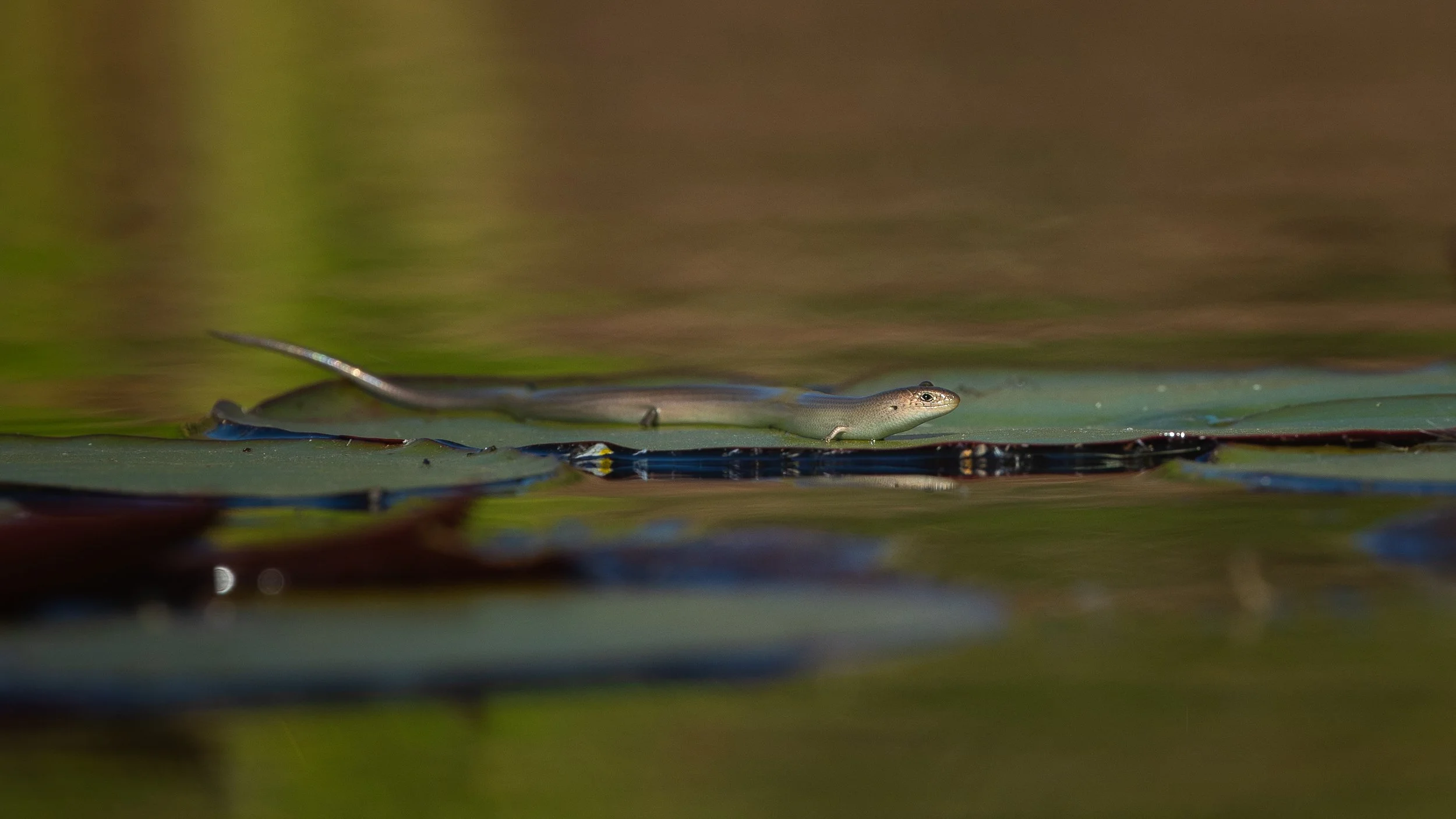
Western Three-toed Skink (Chalcides striatus) resting on a water lily leaf on ou pond.
The snakes of Alentejo are diverse, dominated largely by non-venomous colubrids that play an essential role in controlling rodent and lizard populations. The Western Montpellier Snake (Malpolon monspessulanus) is the largest snake in the region, an impressive predator that uses mild venom from rear fangs to subdue its prey. The beautifully patterned Ladder Snake (Rhinechis scalaris) and the highly agile Horseshoe Whip Snake (Hemorrhois hippocrepis) are frequently encountered in dry scrublands, old agricultural buildings, and stone fences. Near water bodies like our pond, the Viperine Snake (Natrix maura) is highly prevalent. This semi-aquatic snake is an expert swimmer that feeds primarily on fish and amphibians; it is famous for its defensive behavior of mimicking a venomous viper when threatened, though it is entirely harmless.
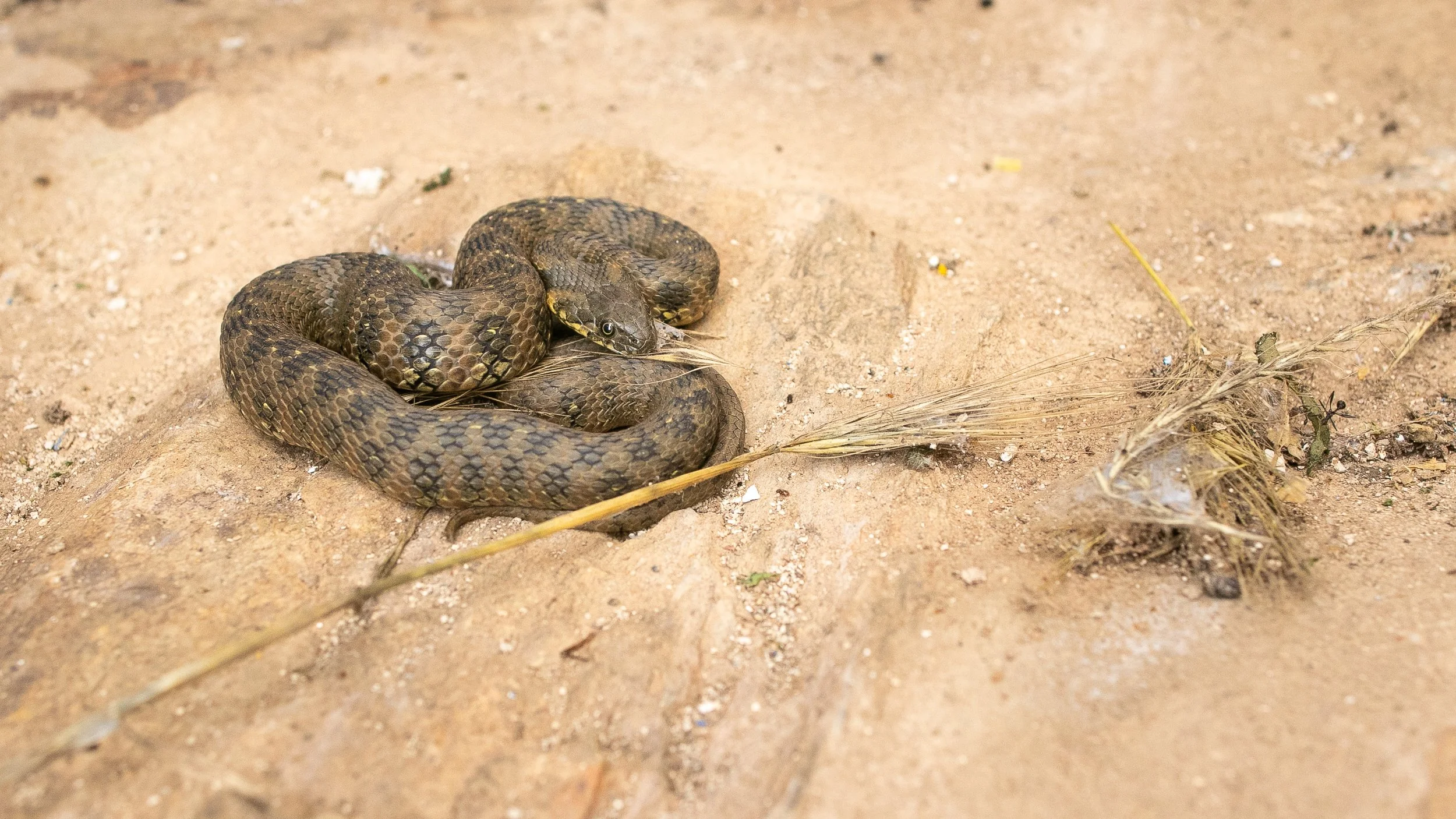
Viperine Water Snake (Natrix maura)
In contrast, true venomous species like the Lataste's Viper (Vipera latastei) are rare and strictly restricted to highly localized, rocky, and undisturbed mountainous terrains within the region. Other secretive snakes include the Southern Smooth Snake (Coronella girondica) and the Iberian False Smooth Snake (Macroprotodon brevis), both of which are small, nocturnal, and rely heavily on the availability of loose soil and rock cover. Aquatic habitats in Alentejo support resilient populations of freshwater turtles, locally called cágados.
Regarding turtles, the Iberian Pond Turtle (Mauremys leprosa) is the most widespread and common terrapin in the southern half of the country, readily visible basking on logs and rocks in rivers, streams, and livestock watering holes.
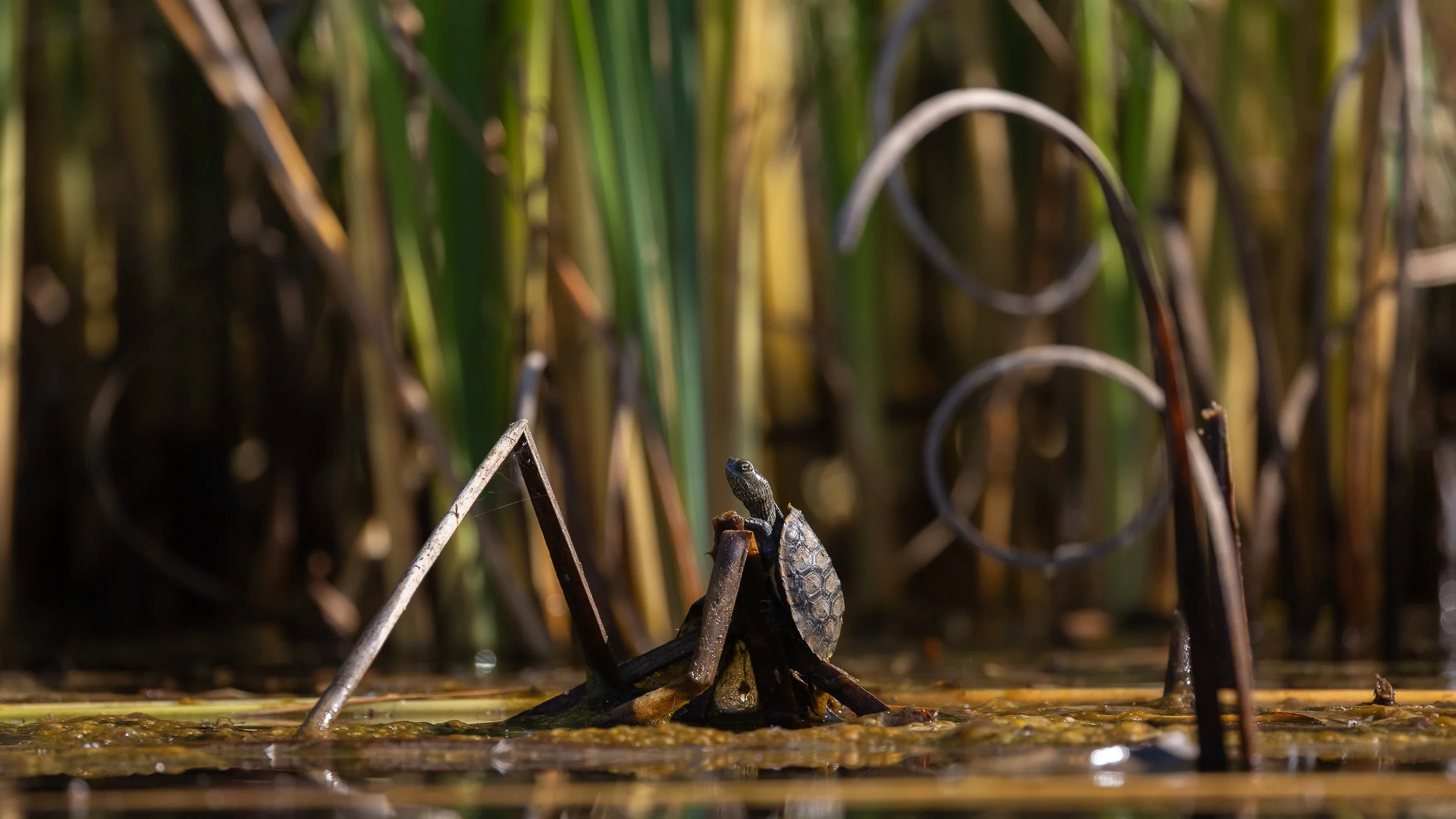
Iberian Pond Turtle (Mauremys leprosa)
The European Pond Terrapin (Emys orbicularis) also exists in the region but is far more localized and scarce, preferring pristine, still waters with abundant aquatic vegetation. We have not seen any on our land yet.
Protecting seasonal wetlands and practicing sustainable land management in the montado forests are effective ways to preserve Alentejo's rich and irreplaceable reptilian heritage.
To maximize chances of spotting these reptiles, timing your visit according to the Mediterranean seasonal cycle is essential :
Spring, specifically from late March to early June, is the absolute peak period for reptile activity in Alentejo. During these months, the daytime temperatures are pleasantly warm but not scorching, prompting lizards, snakes, and terrapins to emerge frequently to bask, search for food, and engage in breeding behaviors.
There is also a secondary, much shorter activity spike in autumn (September to October) when the intense summer heat breaks, and neonates hatch.
Conversely, the searing heat of mid-summer (July and August) forces many species into estivation, a period of dormancy to escape the midday sun, meaning you will generally only spot them during the brief, cooler hours of early morning or late dusk.
During the chilly winter months from November to February, most species retreat deep underground or beneath heavy stone structures where they remain entirely inactive until the spring thaw.
If you are interested in seeing the reptiles of our land, feel free to contact us.